
Travel guide
The Best Time to Visit Kyrgyzstan for Trekking
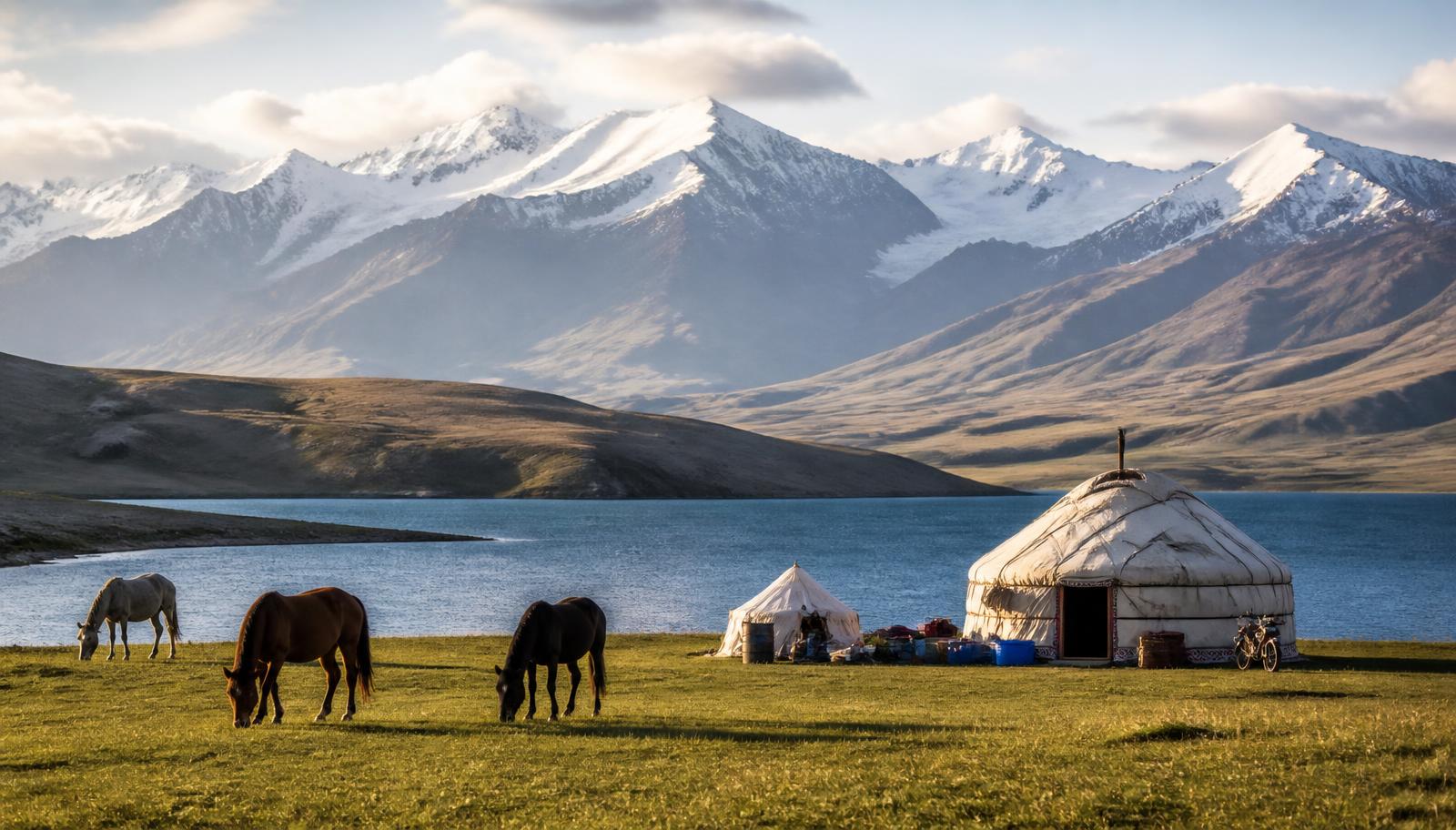
For most trekking in Kyrgyzstan the reliable window is mid-June to mid-September, with July and August the safest bet for crossing high passes. Snow lingers on routes above roughly 3,500m well into June, and the first serious snowfalls usually return in late September.
If you are walking lower valleys, riding, or basing yourself around Issyk-Kul, the season is longer at both ends — late May and early October can be excellent, and much quieter.
The trekking season at a glance
Kyrgyzstan is a mountain country with a sharply continental climate: hot summers in the valleys, cold winters, and a short high-mountain season squeezed between snowmelt and the first autumn storms. Altitude matters more than the calendar date — a 2,000m valley and a 3,800m pass can be in completely different seasons on the same day.
- May–early June: valleys green and flowering, high passes usually still blocked or difficult.
- Mid-June–early July: most routes open, rivers running high with meltwater.
- July–August: the main season, warmest and driest, summer pastures in full use.
- September: stable, clear, cooler nights, thinning crowds; conditions decline through the month.
- October–April: mountain trekking largely out of season; winter travel is a different kind of trip.
Month by month
May and early June
The lower valleys are at their greenest and wildflowers are out. Days are mild, nights cold. Higher passes usually still hold snow, and some mountain roads to trailheads have not yet opened, so ambitious high-altitude itineraries are difficult to guarantee this early.
Late June and July
The season opens properly. Snowmelt keeps river crossings high, especially in the afternoon once the day has warmed, so crossings are generally done early. Alpine meadows are in good condition and summer pastures are occupied.
August
The most settled month for high routes: warm days, comparatively low river levels, and reliable access to trailheads. It is also the busiest month at well-known spots, though 'busy' in Kyrgyzstan is still quiet by Alpine standards.
September
Often the most attractive month for experienced walkers: crisp air, long views, autumn colour in the valleys and far fewer people. Nights get genuinely cold, and by late September fresh snow on high passes becomes likely, so later departures need flexible routing.
Altitude, passes and snow
Many classic Kyrgyz routes cross passes between 3,300m and 4,000m. Those passes are the deciding factor in when a trek can run. Conditions vary year to year, so the sensible approach is to fix your dates first and then choose a route that suits the conditions, rather than the other way round.
Anyone going above about 3,000m should plan for altitude: gradual gain, easy first days and a schedule with slack in it.
Summer pastures and cultural timing
Herding families move livestock to high summer pastures — jailoo — roughly from June to early September. This is what gives Kyrgyz trekking much of its character: yurts on the meadows, horses on the passes, and a landscape that is worked rather than empty. Travel outside those months and the high valleys are beautiful but noticeably emptier.
Choosing your dates
- Want the highest passes and the fewest question marks: mid-July to early September.
- Want quiet trails and sharp light, and can accept cold nights: September.
- Travelling with mixed ability, or combining walking with culture and lakes: June or September.
- Fixed school-holiday dates: build in a spare day or two so weather can be worked around.
Common questions
- Is July too hot for trekking in Kyrgyzstan?
- In the mountains, no — daytime temperatures at altitude are usually pleasant and nights are cold. It is the low-lying cities and valleys, such as Bishkek in midsummer, that get uncomfortably hot.
- Can I trek in Kyrgyzstan in October?
- Lower valley walks and shorter days out are often still possible in early October, but high passes should be treated as out of season. Later in the month, weather and access become unpredictable.
- When is the quietest time to visit?
- June and September are noticeably quieter than the July–August peak while still offering good walking conditions on most routes.
Where this applies
Related guides
Ready to explore Central Asia?
Tell us what kind of multi-day trek you're considering and we'll explore what may be possible.
Plan a bespoke trek